
You’re driving along Brighton Road in South Croydon and the engine light comes on. The car still feels fine, so you think about ignoring it until later.
That’s the mistake.
A warning light doesn’t need panic, just a proper check before a small fault turns into a bigger bill.
Engine Warning Light: Get the Fault Checked Properly
Most drivers ignore the engine light longer than any other, because it covers so much ground. A loose fuel cap can set it off. So can a sensor fault, a misfire, an emissions problem, or something happening deeper in the engine. You can’t tell which one just by looking at the dashboard.
I wouldn’t write it off as “just one of those lights,” even if the car still drives fine.
A steady light usually gives more time to react than a flashing one, but that’s not guaranteed on every car. If the car starts shaking, losing power, smelling odd, or running rough, pull over when it’s safe.
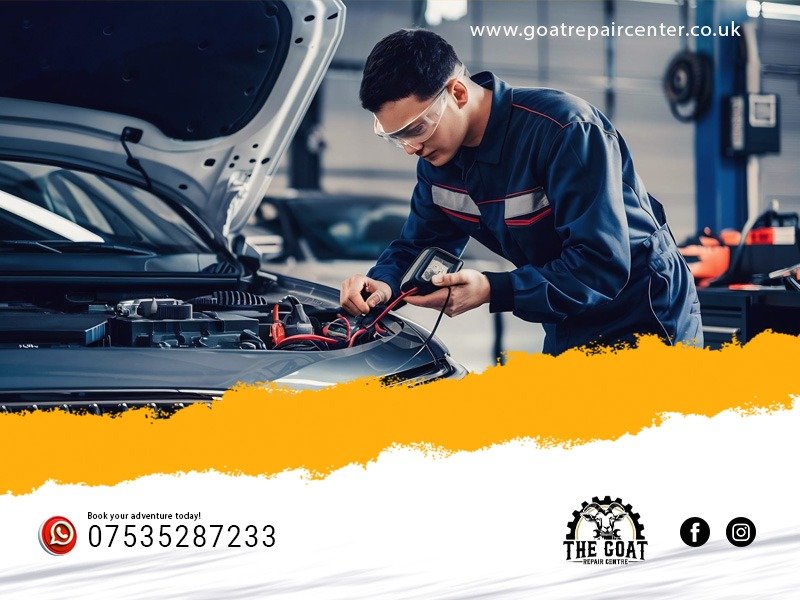
A proper diagnostic check gives the garage fault codes and live data to work from, not a guess. That’s not a replacement for a mechanic who knows what they’re looking at, but it gives them somewhere to start. Real car diagnostics end in an explanation you can actually understand, not a list of parts someone wants to swap out.
Oil Pressure Warning Light: Stop Before Damage Gets Expensive
The oil pressure light moves faster than people expect.
It usually looks like an old oil can on the dash. Once it’s on, the engine might already be running without enough pressure to protect its moving parts, and that gets expensive fast when you have to replace the worn-out parts.
Don’t keep driving to see how far you get. Pull over. Turn the engine off. Check the oil level yourself only if you know how to do it safely.
A low oil level is one explanation, but it’s not the only one. The oil pump could be failing. The pressure sensor could be wrong. There could be a leak, or just wear from age. I wouldn’t guess which one without testing it.
Nothing about this changes: if the oil pressure light comes on, don’t nurse the car across Croydon hoping it holds. That short drive can cost more than the recovery truck would.
Brake Warning Light: Do Not Take Chances With Stopping Power
Brakes don’t leave much room for chances.
Sometimes the light is nothing more than a handbrake that hasn’t fully released, so check that first. If it’s still on after that, take it seriously.
Low brake fluid is the most common trigger. Worn pads cause it on some cars. An ABS fault usually lights up on its own, though most drivers notice both warnings around the same time.
A soft pedal. The car pulling to one side. Braking that takes longer than it used to. Any one of those means stop driving and take it to a garage.
A trusted garage checks the whole system before saying anything, not just glances at a warning light. You deserve a straight answer about what’s wrong, and a mechanic who fixes it right the first time.
Battery Warning Light: It Is Not Always Just the Battery
Most drivers see the battery light and reach for the same conclusion: new battery. That’s not always right.
The light usually points to the charging system as a whole. The battery might have a fault, but the alternator, the drive belt, the wiring, or a loose connection could be causing it instead. Dimming headlights, heavier steering, a car that struggles to restart- the charging system connects all of it.
This one catches people out because the car can keep driving for a while after the light appears. Then, once the charge drops too far, it just stops, often without much more warning.
A battery test alone doesn’t tell the whole story. A decent garage checks the charging output and everything connected to it before replacing anything, which saves you paying for a part that was never broken.
Temperature Warning Light: Overheating Needs Fast Action
Overheating doesn’t wait for you to notice.
Heat damages engine parts fast, and in bad cases leads to a blown head gasket, though I wouldn’t assume that’s happening without checking first.
Pull over as soon as you can and switch off the engine. Leave the coolant cap alone while it’s hot; the pressure inside can send boiling coolant straight at you.
Low coolant, a leak, a failed fan, a broken thermostat, or something else in the cooling system could be the cause. Steam or a sweet smell usually give it away. Anything quieter needs a proper look with pressure testing, not a guess.
This is exactly where a decent local vehicle repair garage earns its keep. You want someone who tracks down the actual fault, not someone who tops up the coolant and waves you off.
Warning Lights Are Your Car Asking for Help
A warning light is your car flagging a problem while it’s still small.
Ignore it and you’re gambling with your repair bill, your safety, and whether the car gets you where you’re going. Guess at the cause yourself and you’ll probably spend money on the wrong part. Getting it checked properly is still the cheapest option, even though it never feels that way at the time.
If you’re driving in Croydon, the simplest next step is a proper diagnostic check with a garage that explains the fault in plain language before touching anything. If the light touches on safety or roadworthiness, it’s also worth a call to your local MOT Test centre before you drive any further.
Your car isn’t asking for panic. It’s asking to be checked before the problem gets worse.