
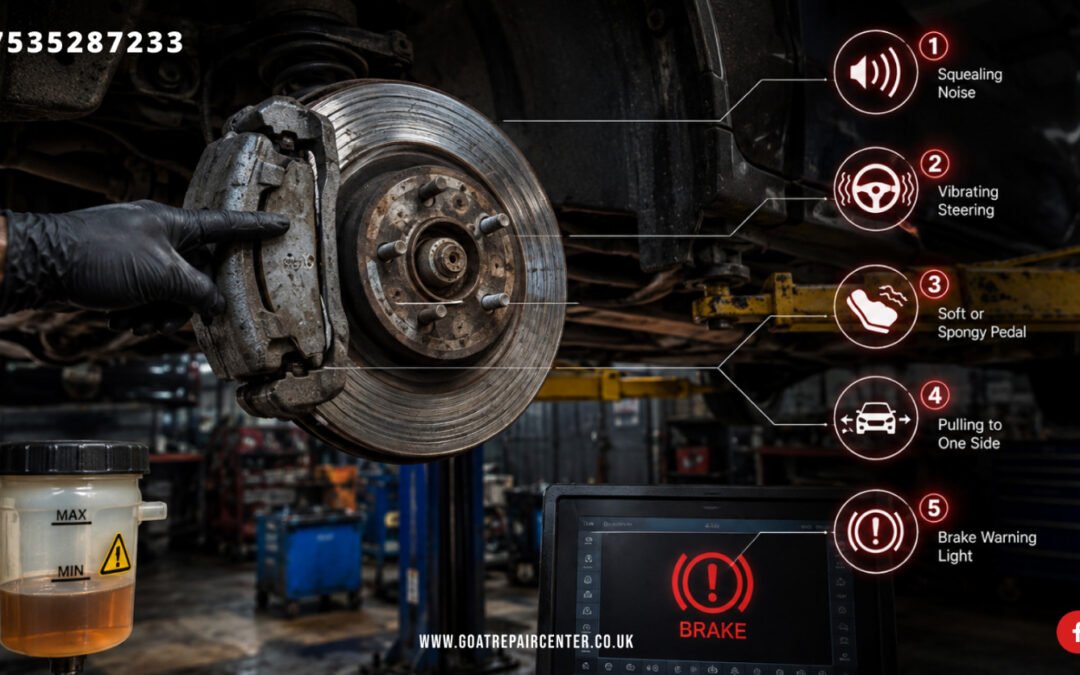
According to the UK DVSA MOT inspection manual, a brake pad worn below 1.5 millimetres is classified as a “Dangerous” defect, meaning the vehicle fails its MOT and should not be driven until the fault is repaired.
Yet, rather than acting on early warning signs, many drivers wait until they hear the grinding of metal before booking a car service in Croydon. This hesitation turns a routine replacement into a severe safety hazard and a major bill.
Because your brakes are your primary safety system, recognising the physical symptoms of failure through sound, touch, and smell is critical before a minor fault compromises your control of the vehicle.
1. The Metal-on-Metal Grind Destroying Your Discs
Brake pads rely on a thick friction material to grip the brake disc and smoothly slow your car. Once this material completely wears away, the bare metal backing plate is forced directly against the steel brake disc.
This creates a harsh, continuous grinding noise that easily cuts through everyday engine and road sounds. Beyond being a nuisance, this metal-on-metal contact physically gouges deep grooves into the smooth surface of the disc.
Because new pads require a perfectly flat surface to function, you can no longer simply swap out the pads; both the pads and the ruined discs on that axle will require full replacement. Ultimately, ignoring this sound drastically inflates repair costs while severely reducing your stopping power.
2. A Spongy Pedal That Sinks Toward the Floor
Moving from sound to feel, your braking system relies on steady hydraulic pressure. Pressing the pedal forces fluid down the lines, squeezing the pads against the discs. If the pedal suddenly feels soft, spongy, or sinks all the way to the floor mat, the system has suffered a dangerous drop in pressure.
This typically happens when air enters the closed lines or fluid escapes through a split hose. In an emergency, a spongy pedal means the vehicle will not stop predictably, often requiring frantic pumping just to generate basic stopping force.
How to spot the underlying fluid leak:
- Location: Look directly behind the wheels and inside the inner tyre sidewalls for wet patches.
- Appearance: Fresh brake fluid is clear or slightly yellow, while older fluid turns a dark, muddy brown.
- Texture and Scent: The fluid is highly oily to the touch and carries a distinct, fish-oil-like odour.
3. Violent Steering Wheel Shudder During Braking
While a soft pedal indicates pressure loss, a violent shaking through the steering wheel points to heat damage. Brakes generate enormous temperatures to halt a heavy vehicle. If hot brakes are rapidly cooled, such as by driving through a deep puddle, the sudden temperature shift can physically warp the perfectly flat steel discs.
Consequently, the brake pads bounce rapidly over this newly uneven surface. This high-speed bouncing translates into an aggressive shudder that reduces tyre contact with the road, significantly increasing motorway stopping distances. If left untreated, this vibration relentlessly hammers your steering rack and suspension bushes.
What starts as a need for a straightforward car repair in Croydon can easily escalate into a major, expensive front-end suspension rebuild.
4. The Vehicle Pulling Hard to One Side
A healthy vehicle should track in a perfectly straight line during heavy braking. If the car violently yanks to the left or right when you press the pedal, you are experiencing a severe mechanical imbalance.
Usually, this occurs because a brake caliper has seized from rust, or a collapsed flexible hose is restricting fluid flow to just one wheel. The working side grips the disc hard, while the faulty side rolls freely, aggressively pulling the car out of its lane. On narrow UK roads, this defect creates a massive hazard, as an emergency stop could easily force your vehicle into the kerb or directly into oncoming traffic.
5. Acrid Burning Smells After Normal Driving
Healthy brakes do not produce noticeable odours during standard daily commutes. A sharp, chemical burning smell radiating from the wheel arches means excessive, constant friction is occurring. This happens when a brake pad gets stuck against the disc and fails to retract, dragging continuously as you drive.
This constant friction overheats the entire wheel assembly, rapidly destroying the brake pad material. If pushed too far, the intense heat transfers into the brake calipers and boils the hydraulic fluid. While specific manufacturer tolerances vary, standard fresh DOT 4 fluid typically boils around 230 degrees Celsius. When it turns to vapour, compressible gas bubbles enter the lines, leading to “brake fade.” In this terrifying scenario, you can press the pedal firmly to the floor, but the brakes will physically lack the ability to grip.
Making the Call: Drive Carefully or Call a Tow?
When braking issues arise, deciding how to get to the garage is your final critical decision. The cost of a tow truck is always lower than the cost of a collision.
- When to drive cautiously: A mild squeak or a slight vibration usually permits a slow, highly cautious drive to a local car garage in Croydon.
- When to call a recovery truck: A sinking pedal, a visible fluid leak, or violent pulling into oncoming traffic means the car is entirely unsafe for the road.
Never gamble with your stopping distance. Whether your brake pads are hovering dangerously close to that DVSA 1.5mm failure threshold or your pedal is sinking to the floor, assuming the worst is the safest, most cost-effective way to handle brake maintenance.